
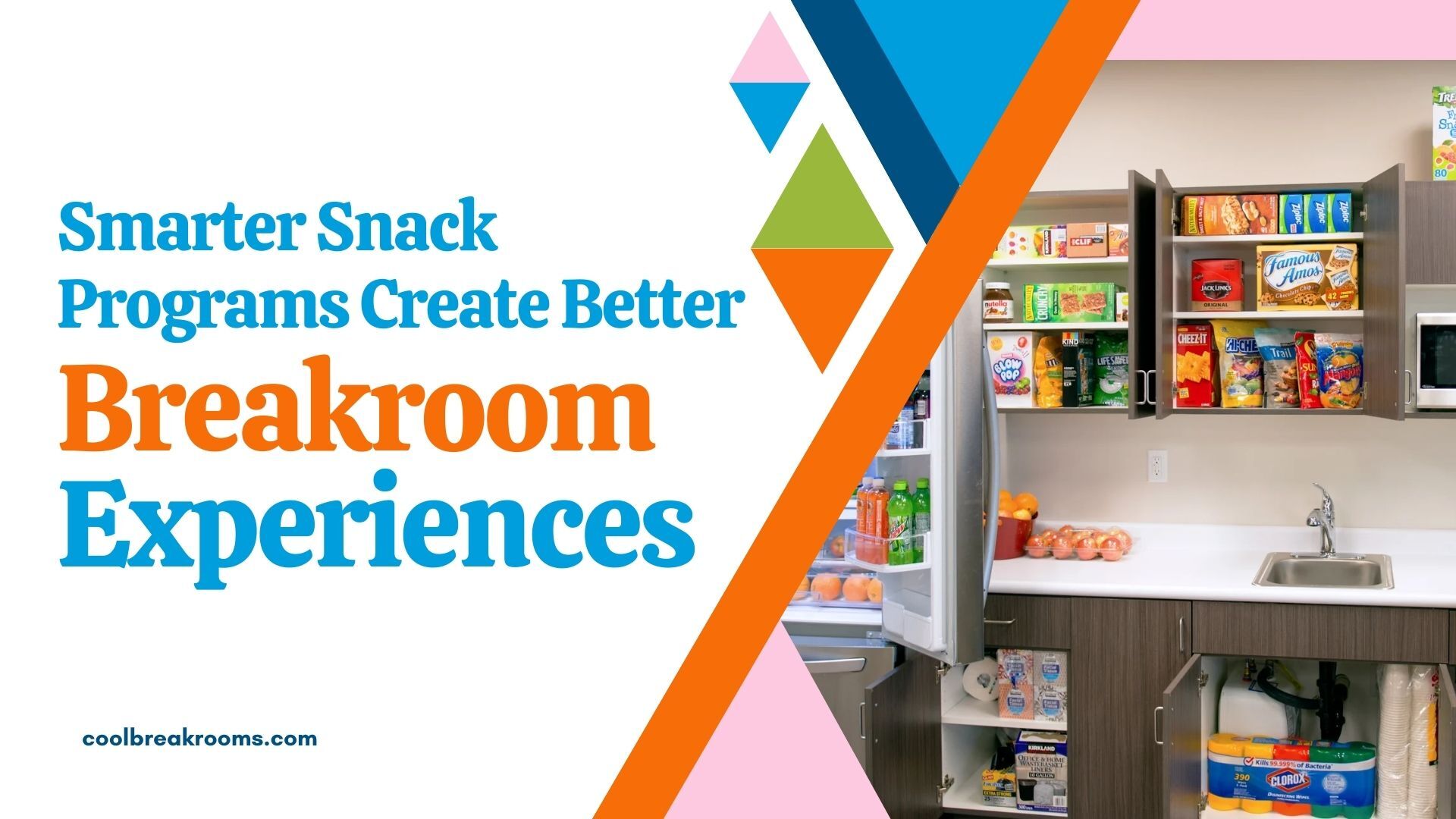
13 Feb Smarter Snack Programs Create Better Breakroom Experiences
Snack programs are one of the most visible and frequently used workplace benefits. They shape how employees experience the breakroom on a daily basis and quietly influence energy, satisfaction, and perceptions of care.
Because snacks are part of everyday routines, they often become background noise. Yet the quality of those routines matters. A thoughtful snack program can make breaks feel restorative rather than transactional and can signal care in subtle but consistent ways.
The strongest snack programs are not built on abundance. They are built on intention. When enjoyment, health, and sustainability are thoughtfully balanced, snack programs become easier to maintain and more meaningful for employees.
Quality Over Quantity Improves the Experience
More options do not always create better outcomes.
Overloaded shelves can lead to decision fatigue, cluttered spaces, and higher levels of waste. When employees are faced with too many similar choices, satisfaction often decreases rather than improves. The experience becomes harder to navigate rather than more generous.
A curated selection of fewer, higher quality snacks simplifies decision making and elevates the overall experience. Employees spend less time searching and more time enjoying their break. For organizations, fewer items also mean cleaner displays, easier restocking, and more predictable usage.
Quality over quantity creates a breakroom that feels intentional rather than overwhelming.
Stocking What Employees Actually Want
Assumptions are one of the biggest challenges in snack program design.
What decision makers think employees want does not always align with real behavior. The most effective snack programs rely on usage data to understand which items are consistently chosen and which are left behind.
Tracking consumption patterns allows organizations to refine assortments over time. Popular items stay stocked. Low performing items are reduced or replaced. Seasonal changes and evolving preferences are reflected naturally rather than through one time resets.
When snack programs adapt based on real preferences, employees feel seen. The breakroom stays relevant and avoids becoming stagnant or wasteful.
Healthier Options as Part of the Everyday Mix
Healthier snacks are most successful when they feel like a natural part of the offering.
Rather than removing familiar favorites, smart programs introduce better for you options alongside them. This approach supports variety without creating a sense of restriction or judgment.
Placement and presentation matter. When healthier options are easy to find and visually appealing, employees are more likely to choose them. Choice remains intact, but better options become more accessible within the flow of the space.
The goal is not to control behavior. It is to make good choices easier within a balanced selection.
Reducing Waste Through Smarter Planning
Snack waste is often the result of overstocking and misalignment between supply and demand.
Ordering based on assumptions or fixed quantities leads to expired products and unnecessary disposal. Smarter planning uses real consumption data to align inventory with actual usage across locations, teams, and time periods.
This approach reduces waste, improves budget efficiency, and supports sustainability goals without adding complexity for employees. The system works quietly in the background, ensuring the breakroom stays well stocked without excess.
When waste is reduced through planning rather than restriction, sustainability becomes effortless.
Sustainability That Supports the Experience
Sustainable snack programs do not need to feel utilitarian.
Packaging choices, sourcing, and display all play a role in how the breakroom feels. Recyclable or lower waste packaging can still look attractive and intentional when selected thoughtfully and presented well.
When sustainability is integrated into the experience rather than treated as a separate initiative, participation increases naturally. Employees follow the system that is already designed for them, without needing reminders or rules.
Why Smarter Snack Programs Matter
Snack programs may seem small, but they shape daily experience in meaningful ways.
When choices are curated, informed by real usage, and planned with intention, the breakroom becomes easier to use and more enjoyable. Employees spend less time navigating options and more time taking a real break. Organizations reduce waste and operate more efficiently without adding complexity.
A well designed snack program does not try to do everything. It focuses on doing the everyday things well, consistently, and thoughtfully.
Looking to refine your breakroom snack program this February and beyond?
Coolbreakrooms helps organizations design snack programs that balance enjoyment, wellness, and sustainability through smarter planning and better systems.