
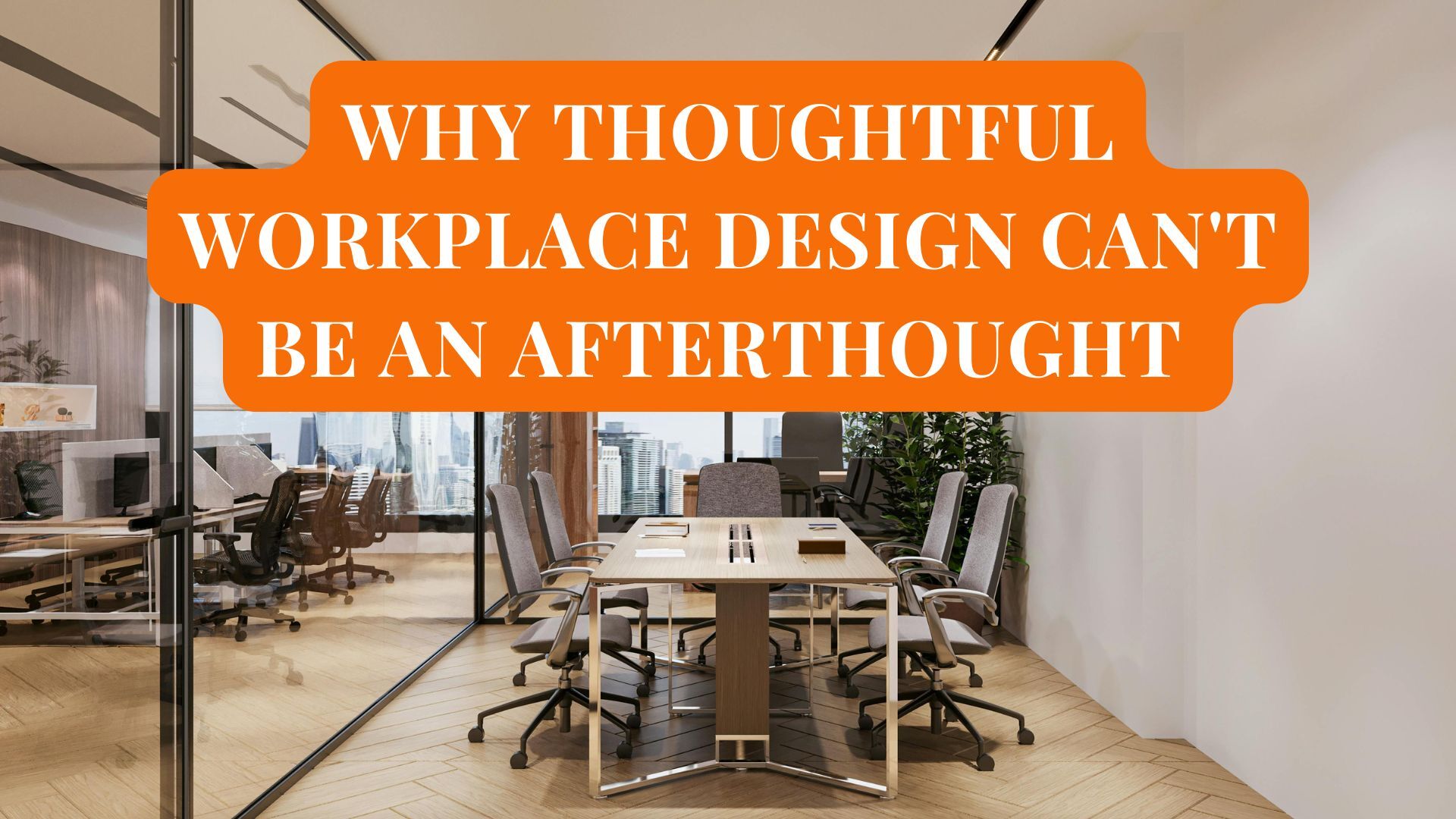
19 Feb Why Thoughtful Workplace Design Can’t be an Afterthought
Great leadership is focusing on better workplace designs
Leadership is often described through vision, strategy, and communication. These elements are important, but they are not how leadership is most consistently experienced.
Employees encounter leadership through the systems that shape their workday. Through the spaces they move through, the friction they feel or do not feel, and the reliability of everyday environments. Thoughtful workplace design turns leadership intent into something tangible and repeatable.
When design is done well, leadership becomes visible in quiet, practical ways.
Leadership Beyond Strategy
Strong leadership extends beyond planning and messaging.
Operational decisions shape how work actually feels. Choices about layout, flow, accessibility, maintenance, and consistency influence whether employees can focus on meaningful work or spend time navigating avoidable obstacles.
Design choices matter because they reveal priorities. A workplace that functions smoothly signals that leadership has invested in how people experience their day, not just in what they are expected to deliver. Over time, this builds credibility and trust in leadership decisions.
Operational Decisions Are Leadership Decisions
Design is often treated as aesthetic, but it is fundamentally operational.
Decisions about how shared spaces are stocked, cleaned, replenished, and maintained determine whether employees experience ease or frustration. These decisions shape behavior without requiring policy or enforcement.
When leadership prioritizes systems that work reliably, employees feel supported without needing explanation. The workday feels more predictable, which reduces cognitive load and stress.
Designing for Ease and Flow
Ease is one of the clearest expressions of respect.
When shared spaces are intuitive, employees do not have to think about how to use them. Clear organization, logical placement, and predictable functionality allow people to move through their day with less friction.
Designing for flow means anticipating real behavior. It considers peak usage times, traffic patterns, and how different teams interact with the same space. When these factors are addressed, the environment supports focus rather than distraction.
Small improvements in ease compound over time. What feels minor in isolation becomes meaningful when experienced every day.
The Breakroom as a Leadership Signal
The breakroom is one of the most revealing spaces in the workplace.
It is used by employees across roles, schedules, and seniority levels. Because of this, it reflects leadership priorities in a very visible way. A breakroom that is consistent, clean, and easy to use communicates care and reliability without words.
When the space feels neglected or unpredictable, employees notice that too. The breakroom becomes a signal of whether leadership pays attention to the everyday experience or only to high level initiatives.
Consistency as a Form of Care
Consistency is often underestimated as a leadership tool.
Employees do not expect perfection, but they do value reliability. When systems work the same way day after day, people feel more confident navigating their environment.
Consistent experiences reduce friction and build trust. They signal that leadership decisions are intentional and sustained, not reactive or performative. Over time, this consistency becomes a foundation for engagement and alignment.
When Systems Support People
The most effective systems support employees quietly.
When design works as intended, employees feel supported without being told they are supported. Friction disappears. Expectations become clear. The environment does the work instead of requiring constant reminders or oversight.
These systems shape how employees relate to the organization. Leadership becomes something they experience through reliability and care rather than through messaging alone.
Designing for the Long Term
Thoughtful workplace design considers how needs evolve over time.
Leadership that invests in flexible systems allows spaces to adapt without constant overhaul. Modular layouts, scalable programs, and data informed decisions help environments remain effective as teams grow and change.
This long term thinking reinforces stability. Employees feel that leadership is planning for sustainability rather than short term optics.
Why Thoughtful Design Reflects Strong Leadership
Leadership shows up most clearly where people live their workday.
When workplace design prioritizes ease, consistency, and care, employees experience leadership values in action. Thoughtful systems turn intent into lived experience, reinforcing trust over time.
Rather than relying solely on communication, strong leaders allow design and operations to quietly demonstrate what matters.
Looking to reinforce leadership values through thoughtful workplace design?
Coolbreakrooms helps organizations create breakroom environments that reflect care, reliability, and operational excellence through everyday experiences.