
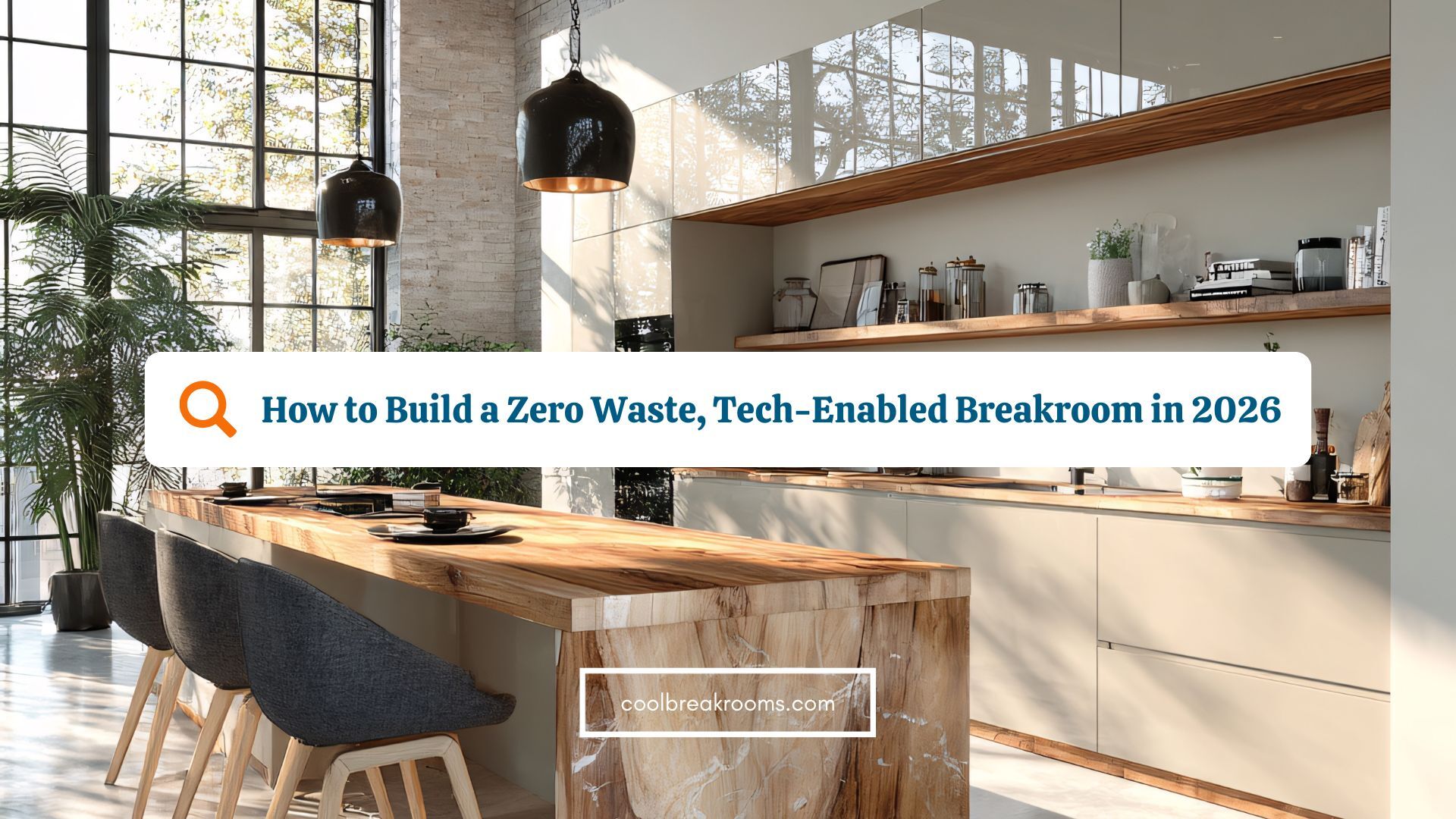
27 Jan How to Build a Zero Waste, Tech-Enabled Breakroom in 2026
In 2026, sustainability and technology no longer live in separate conversations. They intersect in the most practical place possible: the breakroom.
As workplaces look for ways to reduce waste without adding friction, the breakroom becomes the natural starting point. It is where daily consumption happens, habits form, and small choices repeat over time. When technology is applied thoughtfully, it improves both sustainability and employee experience at the same time.
Here is what it actually takes to build a zero waste, tech enabled breakroom in 2026.
1. Why the Breakroom Is Ground Zero for Change
Most daily workplace waste is generated in the breakroom. Single use packaging, disposable cups, leftover food, and overstocked snacks add up quickly.
Because so much activity happens here, even small operational changes have an outsized impact. Adjusting how snacks are stocked, how beverages are served, or how waste is sorted can significantly reduce landfill output without disrupting the workday.
The breakroom offers a rare opportunity to influence behavior through design rather than rules. When sustainable choices are easy and intuitive, people naturally adopt them.
2. Smart Inventory and Predictive Restocking
One of the biggest drivers of waste in traditional breakrooms is over ordering. Shelves get stocked based on assumptions rather than actual usage, leading to expired products and unnecessary disposal.
In 2026, smart inventory systems change that. AI driven replenishment tools track real consumption patterns and restock based on demand. Popular items stay available. Low performing items are reduced or rotated out.
For employees, this feels seamless. Shelves are stocked with things people actually want. For organizations, it means less waste, fewer stockouts, and more efficient spending. Data informed snack programs improve experience without feeling intrusive or overly technical.
3. Touchless and Frictionless Breakroom Technology
Convenience is no longer a perk. It is the baseline expectation.
Modern breakrooms rely on touchless and frictionless systems such as mobile ordering, QR menus, and easy digital payment options. These tools reduce bottlenecks, improve hygiene, and streamline the entire break experience.
When technology removes friction, employees spend less time navigating logistics and more time actually resting. A smooth experience encourages people to use the breakroom regularly, reinforcing healthy habits and social connection.
4. Sustainability Infrastructure That Works
Sustainable systems only succeed if people actually use them. In 2026, the most effective breakrooms focus on infrastructure that feels intuitive and appealing.
Reusable dishware replaces disposable options when it feels premium and convenient. Composting and recycling stations work best when they are clearly labeled, thoughtfully placed, and easy to understand at a glance.
When sustainability infrastructure feels integrated rather than added on, participation increases naturally. Employees do not feel like they are being asked to do extra work. They simply follow the path that is already designed for them.
5. Zero Waste Without Sacrificing Experience
One of the biggest misconceptions about sustainability is that it requires sacrifice. In reality, zero-waste breakrooms can feel just as indulgent as traditional ones.
Design and sourcing matter as much as policy. Refillable beverage stations, bulk snacks, and recyclable containers can feel elevated when designed well—and platforms like Oscar AI make it easier for companies to source smarter, lower-waste options without compromising on quality or experience. Sustainable packaging does not have to look utilitarian; it can be attractive, intentional, and enjoyable.
When employees associate sustainability with quality rather than restriction, engagement increases and resistance fades.
6. Visibility Drives Participation
People are more likely to support sustainability efforts when they can see the impact.
Breakrooms that display simple metrics such as waste diverted, cups reused, or packaging reduced help employees understand that their small actions matter. Visibility turns abstract goals into tangible wins.
When progress is shared, sustainability becomes a collective achievement rather than a top down mandate. Employees feel part of something positive and measurable.
7. Why Zero Waste Breakrooms Strengthen Culture
Beyond environmental benefits, zero waste breakrooms strengthen workplace culture.
Shared responsibility builds pride and belonging. Employees feel aligned with company values through everyday actions rather than corporate messaging. Sustainability becomes something people experience daily, not just read about in policies.
When technology and sustainability work together, the breakroom becomes a place where values are lived out in practical, human ways.
The Future of the Breakroom
In 2026, the most modern breakrooms are not defined by how many options they offer, but by how thoughtfully they are designed. Technology reduces friction. Sustainability reduces waste. Experience remains central.
When done right, the breakroom becomes proof that operational efficiency and human centered design can coexist.
Looking to build a smarter, more sustainable breakroom without sacrificing experience?
Coolbreakrooms helps organizations design tech enabled, zero waste breakroom experiences that support both people and the planet.