
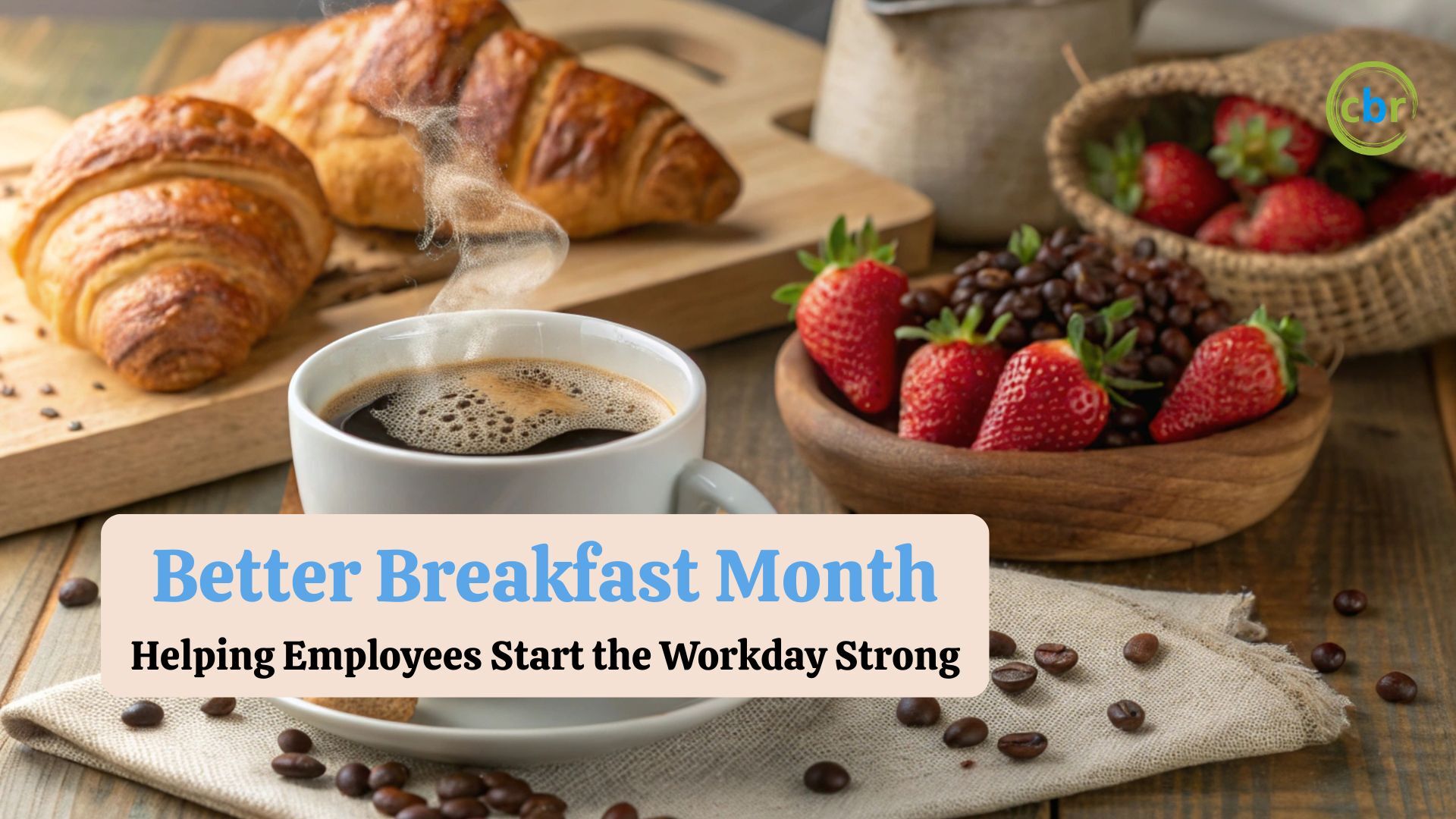
15 Sep Better Breakfast Month: Helping Employees Start the Workday Strong
Mornings rarely go exactly as planned. An early meeting pops up, traffic takes longer than expected, or getting everyone out the door leaves little time to make breakfast. By the time employees arrive at work, eating may already have fallen to the bottom of the list.
Better Breakfast Month is a timely reminder that the first meal of the day does not need to be elaborate. When workplaces provide convenient breakfast options, employees have an easier way to fuel their mornings without making another stop, leaving the office, or waiting until lunch.
Why Breakfast Is Often the First Thing to Go
Most people understand the value of starting the day with something to eat. The challenge is usually not knowing what to do. It is finding the time to do it.
Breakfast often requires preparation, packing, or an extra stop before work. When mornings get rushed, skipping it can feel like the easiest way to save a few minutes. The problem often shows up later, when hunger starts competing with concentration during meetings and important tasks.
A thoughtfully stocked breakroom removes several steps from the process. Employees do not have to plan ahead or leave the workplace once the day has started. Breakfast is simply available when they are ready for it.
Make Breakfast Work for Different Routines
Not everyone arrives at the same time or wants the same kind of breakfast. Some employees may want something light before their first meeting, while others need a more substantial option after a long commute or morning workout.
A balanced workplace breakfast selection can include:
- Breakfast and granola bars
- Yogurt and dairy-free alternatives
- Fresh fruit
- Oatmeal and hot cereals
- Nuts and trail mix
- Protein-rich snacks
- Breakfast sandwiches
- Coffee, tea, and cold beverages
The goal is not to create a restaurant-sized menu. It is to provide enough variety for employees to find something that fits their schedule, appetite, and preferences.
Shelf-stable items make it easier to maintain consistent availability, while refrigerated products add freshness and more substantial choices. Combining the two helps create a practical program without making the selection feel limited.
Look Beyond the Quick Sugar Rush
Convenience matters, but it is not the only consideration when building a breakfast selection. Options containing protein, fiber, or a combination of nutrients can provide a more satisfying start to the morning than products centered primarily around added sugar.
That does not mean familiar favorites need to disappear. A successful breakroom serves people with different tastes, so balance is more useful than trying to create a perfectly “healthy” shelf.
Pair fruit with yogurt, offer oatmeal alongside pastries, or place protein-rich snacks near breakfast bars. Small choices like these give employees more ways to build a breakfast that works for them without turning the breakroom into a lesson about how anyone should eat.
Coffee Matters, but It Is Not Breakfast
For many employees, coffee is the first stop of the workday. A quality workplace coffee program can make mornings more enjoyable while creating a natural place for colleagues to connect before schedules take over.
Coffee works best as part of the morning experience rather than the entire experience. Pairing fresh coffee and tea with convenient food options gives employees a more complete way to begin their day.
It is also worth thinking beyond one standard pot. Decaf, tea, dairy-free creamers, and cold beverages can help the morning station serve a wider range of preferences.
Create a Morning Destination
Where breakfast products are placed can determine whether they become part of an employee’s routine.
Keep popular breakfast items close to coffee and beverage stations so employees can make one quick stop. Maintain clean counters, visible inventory, and an easy traffic flow during busy arrival times. If the workplace uses a micro market, grouping breakfast products together can make the experience faster and more intuitive.
Employers can also introduce new options through breakfast tastings, employee polls, or rotating featured products. These small changes keep the selection interesting while helping businesses understand what their teams actually want.
A Better Morning Starts with Easier Choices
A workplace breakfast program does not need to be complicated to be valuable. Its purpose is to make a busy morning a little easier.
When employees can walk into the breakroom and find coffee, fruit, oatmeal, yogurt, or a protein-rich snack waiting for them, breakfast becomes one less thing they need to solve before the workday begins.
Workplace Breakfast Questions, Answered
What are good breakfast options for an office breakroom?
A strong selection can include breakfast bars, yogurt, fruit, oatmeal, nuts, protein-rich snacks, breakfast sandwiches, coffee, and tea. Combining shelf-stable and refrigerated products provides both convenience and variety.
How can employers accommodate different dietary preferences?
Offer a mix of products, including dairy-free, lower-sugar, vegetarian, and high-protein choices. Clearly displaying ingredient and allergen information can also help employees make informed decisions.
How can a workplace encourage employees to use its breakfast program?
Keep products visible, stock them before employees arrive, and place breakfast items near the coffee station. Employee feedback, tastings, and occasional product rotations can also help increase participation.
Ready to give your team an easier way to start the day? Work with Coolbreakrooms to create a workplace refreshment program built around the way your employees actually work.